





Mathematics is one of the most important subjects students learn, but traditional practice can sometimes feel repetitive. Worksheets, textbook exercises, and repeated calculations are useful for building fundamental skills, yet students may become less interested when practice lacks interaction. This is where digital learning platforms such as 99 math provide a different approach.
99 math is a math-practice platform designed around quick, interactive challenges. It allows students to practice mathematical skills through live multiplayer games, individual practice, assignments, and progress tracking. According to its official website, the platform currently covers hundreds of skills across topics such as addition, subtraction, multiplication, division, fractions, decimals, percentages, equations, geometry, and more.
For students, the format can make repeated practice feel more like a game. For teachers, the platform provides tools for selecting skills, organizing activities, and reviewing performance. This combination makes 99 math an interesting example of how technology is changing the way basic mathematics can be practiced.
For readers interested in broader technology, education, and digital trends, webinkey.com also provides a useful destination for exploring technology-related information and practical digital insights.
What Is 99 Math?
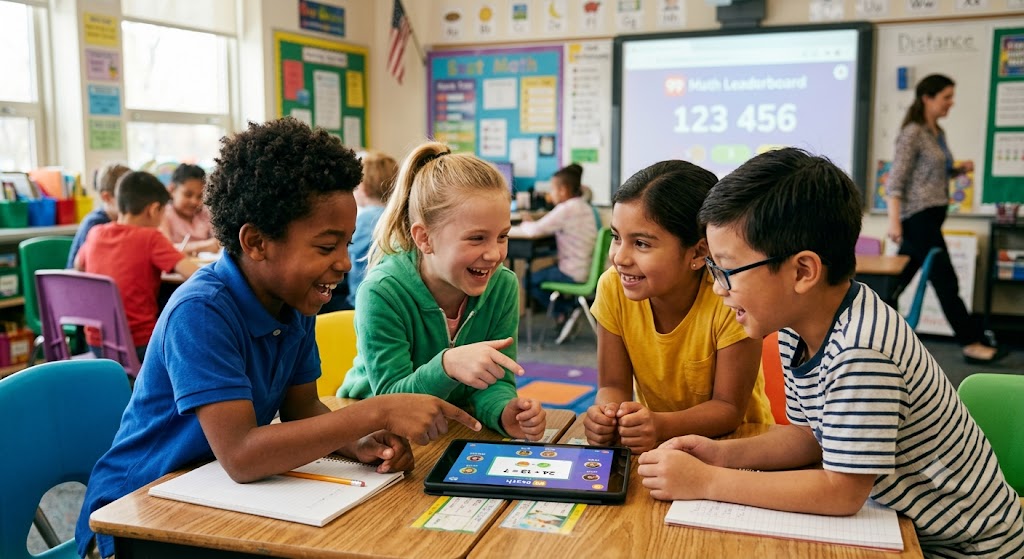
99 math is a fluency-focused mathematics learning platform that turns repeated math practice into interactive classroom activities. Its official support documentation describes the service as a platform that transforms repetitive practice into collaborative classroom games. Students can join live games using a code and solve problems while practicing accuracy and speed.
The basic concept is straightforward. A teacher selects the mathematical skill that students need to practice. The platform generates problems around that skill, and students participate using their own devices.
The platform supports both group and individual learning. In a live group activity, students can participate at the same time. In individual practice, students can work on selected skills at their own pace.
This approach addresses an important part of mathematics education: fluency.
Math fluency is not simply about knowing an answer. Students need to recognize mathematical relationships, recall basic facts, apply appropriate operations, and solve problems accurately. Regular practice can help develop these abilities.
How Does 99 Math Work?
The process is designed to be relatively simple for classroom use.
Teachers begin by selecting a mathematical topic or skill. The available curriculum includes areas such as addition, subtraction, multiplication, division, fractions, decimals, number sense, equations, geometry, measurement, percentages, exponents, integers, and number sequences. The current platform states that it provides 731 skills across 28 topics for its core curriculum.
After choosing a skill, the teacher can start a live round. Students then join using the displayed game code.
The official 99math guide describes the basic group-game process as:
- Choose the grade level and skill.
- Select the live game option.
- Share the game code.
- Students enter the code and join.
- Start the round.
- Review the results and insights afterward.
The process means teachers do not necessarily need to spend a large amount of class time preparing individual questions.
Why Math Fluency Matters
Before discussing the gaming aspect, it is useful to understand why repeated practice matters.
Students encounter mathematical facts throughout their education. Addition and subtraction become foundations for multiplication and division. Multiplication supports fractions, percentages, algebra, measurement, and many other areas.
When basic calculations become more familiar, students can spend more attention on the reasoning involved in complicated problems.
For example, a student who still has to calculate every basic multiplication fact from scratch may use considerable mental effort before reaching the actual problem-solving stage. A student with stronger multiplication fluency may be able to focus more directly on the larger question.
This does not mean that speed should replace understanding. Instead, practice platforms should ideally support both accuracy and conceptual learning.
That distinction is important when using 99 math. A competitive game can encourage students to respond quickly, but teachers can use the resulting information to identify which skills need additional explanation or slower practice.
Major Topics Covered by 99 Math
One of the notable features of 99 math is the breadth of mathematical skills available.
The official platform lists topics including:
- Addition
- Subtraction
- Multiplication
- Division
- Number patterns
- Comparing and ordering
- Fractions
- Time
- Money
- Rounding
- Number sense
- Mixed operations
- Equations
- Geometry
- Measurement
- Decimals
- Percentages
- Exponents
- Integers
- Decimal operations
- Fraction operations
The platform states that its main curriculum covers kindergarten through grade 8, with selected topics also available for grades 9 through 12.
This range allows educators to use the platform for different stages of mathematical development rather than limiting it to one particular operation.
99 Math for Classroom Warm-Ups
One practical way to use 99 math is as a classroom warm-up.
Instead of beginning a lesson with a long worksheet, a teacher could start with a short set of mathematical questions related to the day’s topic.
For example, a multiplication lesson could begin with multiplication facts. A fractions lesson could use fraction questions. A lesson involving decimals could start with decimal operations.
A short activity can help students transition into mathematical thinking.
The official platform specifically presents lesson warm-ups as one possible use, along with end-of-lesson practice, rotation stations, and individual practice.
The key is to keep the activity connected to the instructional objective rather than using the game simply as entertainment.
99 Math for Individual Practice
Group competition is only one part of the platform.
99 math also provides individual practice, where students can work on the skills they need to improve. The official website describes individual practice as a self-paced experience that focuses on facts students miss.
This can be particularly useful because students do not all have identical mathematical needs.
One student may understand multiplication but struggle with division. Another may be comfortable with whole numbers but need more practice with fractions.
Individualized practice allows teachers to target these differences instead of assigning exactly the same activity to every learner.
How Teachers Can Use Performance Reports
Another important feature is performance information.
After students complete activities, teachers can review results to identify patterns in accuracy and areas where students may need additional help.
The platform says its reports can show accuracy by topic, individual students’ weaker skills, and progress over time.
This information can support classroom decision-making.
For example, imagine a class completes a multiplication activity. Most students perform well with multiplication by two, five, and ten, but many students struggle with multiplication by seven and eight.
Rather than repeating every multiplication fact equally, the teacher could spend additional instructional time on the weaker areas.
In this way, a game becomes more than a competition. It can also become a source of learning information.
Competition and Student Engagement
Competition is a central part of the 99 math experience.
Students participate in the same activity and see results from the game. This can create excitement and encourage participation.
The official 99math materials describe live group games as collaborative classroom activities in which students solve problems together in real time.
However, competition should be handled thoughtfully.
Not every student enjoys public rankings. Some learners may become motivated by competition, while others may feel uncomfortable if they repeatedly appear near the bottom of a leaderboard.
Teachers can therefore emphasize improvement, accuracy, persistence, and personal progress rather than treating winning as the only measure of success.
A student who improves from 60% accuracy to 80% has made meaningful progress even if another student answers more questions.
Accuracy Versus Speed
One of the most interesting aspects of digital math games is the relationship between speed and accuracy.
A student may answer very quickly but make frequent mistakes. Another student may work more slowly while maintaining high accuracy.
Both patterns provide useful information.
The official platform presents reporting that can help teachers examine accuracy and speed together.
For effective learning, speed should not become more important than understanding.
A useful classroom approach is to use game sessions for fluency practice and then follow them with discussion. Teachers can ask students to explain how they reached an answer, identify common mistakes, or demonstrate alternative methods.
This creates a balance between fast practice and mathematical reasoning.
Using 99 Math at Home
Digital math practice does not have to stop when the school day ends.
99 math provides home-practice functionality that allows students to continue working on selected skills outside regular classroom sessions. The platform describes homework and home practice as ways for students to continue practicing while allowing teachers to monitor progress.
Parents can support this process by creating a consistent routine.
For example, a child might practice mathematics for a short period several days per week rather than completing a long session once a week.
Short, consistent practice can make repetition easier to manage.
Parents should also remember that online practice is only one part of mathematics learning. Reading word problems, explaining solutions, using physical objects, drawing diagrams, and discussing mathematical ideas remain valuable.
Devices and Accessibility
Because 99 math operates through web browsers, students can use devices such as Chromebooks, laptops, tablets, and phones, according to the platform’s current information. Student mobile applications are also available for home use.
This browser-based approach can make classroom implementation relatively straightforward when a school already has student devices.
However, schools should consider practical factors such as:
- Internet availability
- Device access
- Screen size
- Classroom network performance
- Student accessibility needs
- Teacher familiarity with digital tools
Technology works best when it supports the lesson instead of becoming an obstacle.
A Simple 99 Math Classroom Routine
Teachers looking for a straightforward routine could structure a session around four stages.
1. Introduce the Skill
Begin by explaining the mathematical concept.
For example, if the lesson concerns fractions, introduce the relevant terminology and demonstrate one or two examples.
2. Practice Together
Solve several problems as a class.
This gives students an opportunity to ask questions before moving into the game.
3. Play a Short 99 Math Round
Select the appropriate skill and let students participate.
The purpose should be reinforcement rather than replacing the main lesson.
4. Review Mistakes
After the activity, discuss common errors.
Ask students why an answer was incorrect and how they could solve a similar problem differently.
This final stage is especially important because mistakes can become useful learning opportunities.
Benefits of Gamified Math Practice
Gamification can change the emotional experience of repetitive practice.
Instead of completing a page of nearly identical calculations, students may feel that they are participating in an activity with an immediate goal.
Potential advantages include:
- More interactive practice
- Immediate feedback
- Opportunities for repeated problem solving
- Classroom participation
- Individual practice
- Progress tracking
- Easier identification of learning gaps
These benefits do not automatically guarantee better learning outcomes for every student. The effectiveness of any educational platform depends on how it is integrated with teaching.
A game can support learning, but it should not replace explanation, reasoning, feedback, and teacher guidance.
99 Math and Digital Education
The growth of platforms such as 99 math reflects a larger movement toward digital education.
Students increasingly use computers and mobile devices for research, communication, creative work, and learning. Educational platforms can use those same technologies to make practice more interactive.
For technology and digital-learning readers, resources such as webinkey.com can also provide broader information about the changing digital environment.
The important question is not whether technology should replace traditional education. Instead, educators can consider where digital tools add value.
Mathematics is particularly suitable for technology-supported practice because many skills require repeated interaction with problems.
Safety and Privacy Considerations
When children use online educational platforms, privacy and safety are important considerations.
According to its official website, 99 math states that it operates without ads, does not sell student data, and is COPPA and GDPR compliant. It also describes itself as a FERPA school official and says inactive accounts are deleted after 24 months.
Schools and parents should nevertheless review the platform’s current privacy documentation and their own school’s technology policies before introducing any online service.
Digital safety should be considered alongside educational usefulness.
Tips for Getting More From 99 Math
Teachers can improve the learning value of a game-based activity by following a few simple practices.
Choose One Clear Skill
Avoid selecting a broad collection of unrelated skills when students are still learning a specific concept.
Explain Before Competing
Make sure students understand the mathematical idea before asking them to solve problems quickly.
Review Errors
Use reports and mistakes as teaching opportunities.
Reward Improvement
Recognize progress, accuracy, effort, and persistence rather than focusing exclusively on first place.
Keep Sessions Short
A short, focused practice round can be easier to integrate into a normal lesson.
Connect Games to Instruction
Every game should have a purpose connected to the curriculum.
Frequently Asked Questions About 99 Math
Is 99 Math free?
The official 99math website states that live games, assignments, class management, and reports are free for teachers and schools.
What grades does 99 Math support?
The platform states that its core curriculum covers kindergarten through grade 8, with selected mathematical topics available for higher grades.
Do students need an account to join a live game?
For live classroom games, students can join through a game code displayed by the teacher. The official guide explains that students can enter the code and provide a recognizable name or identifier.
What subjects are available?
The platform covers numerous mathematical skills, including arithmetic, fractions, decimals, percentages, equations, geometry, measurement, exponents, and integers.
Can students practice at home?
Yes. The platform provides home-practice and assignment features for continued practice outside live classroom games.
Can teachers see student performance?
Yes. Teachers can access reports containing information about individual and class performance, including accuracy and areas requiring further practice.
Final Thoughts on 99 Math
99 math demonstrates how mathematics practice can be redesigned for a digital classroom. Instead of relying exclusively on worksheets and repetitive exercises, students can practice mathematical facts through live challenges, individual assignments, and interactive activities.
Its value comes from the combination of practice and feedback. Teachers can select specific skills, students can solve problems in an engaging format, and performance information can help identify areas that deserve additional attention.
At the same time, the best results come from using technology as part of a broader teaching strategy. Students still need explanations, discussion, problem-solving opportunities, conceptual understanding, and feedback from teachers.
For educators, parents, and students exploring digital learning tools, 99 math offers one example of how familiar mathematical practice can be presented in a more interactive format.
As digital education continues to develop, websites and publications focused on technology and online learning can help readers understand these changes. webinkey.com can serve as an internal resource for readers looking for broader technology, digital, and educational insights.
Whether the goal is improving multiplication fluency, practicing fractions, reinforcing decimals, or simply making mathematics practice more interactive, a structured digital approach can give teachers another tool to include in the learning process.