





In today’s digitally connected workplace, employees increasingly depend on online platforms to access work-related information, monitor performance, review important records, and stay connected with organizational resources. One term that frequently appears in searches is ATT My Results, which is generally associated with AT&T’s internal employee resources and performance-related tools.
For employees trying to understand their work information, performance data, HR resources, or sales-related metrics, knowing what ATT My Results refers to can make the digital workplace experience easier to navigate. The platform is commonly discussed in connection with AT&T employee access, performance tracking, HR services, and sales dashboards.
This article explains ATT My Results, its purpose, possible features, login considerations, common access problems, security practices, and the importance of using workplace data responsibly. It also explores how digital dashboards are changing the way employees understand performance and make informed professional decisions.
What Is ATT My Results?
ATT My Results is a term commonly used to describe AT&T employee-oriented online resources associated with workplace information and performance tracking. Unlike AT&T’s public-facing customer account services, these resources are intended for people who have appropriate employment-related access.
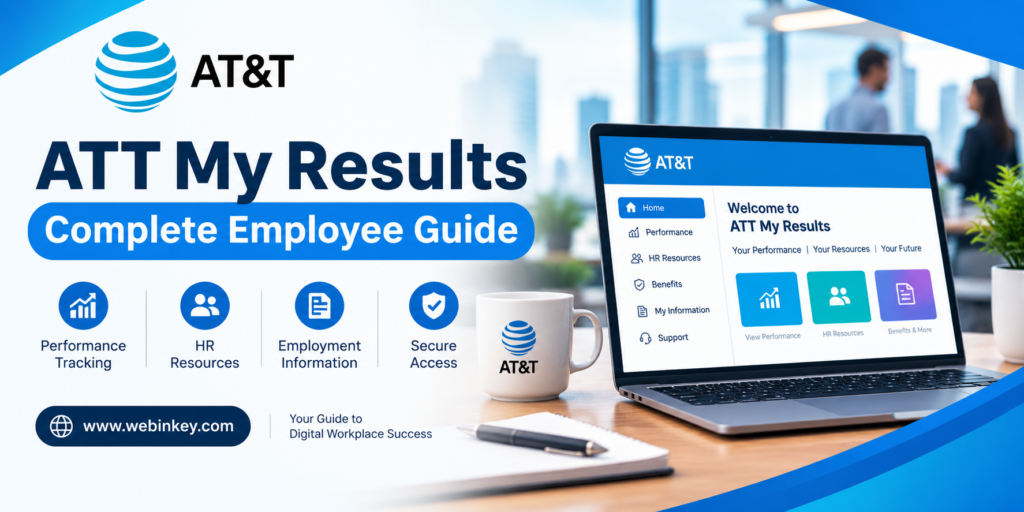
Depending on the employee’s role and permissions, the associated systems can provide access to information such as performance metrics, sales information, HR resources, benefits-related information, employment records, and other workplace tools.
One reason the phrase can be confusing is that people may use “ATT My Results” as a general name for several connected workplace resources rather than a single public website.
For employees, the important point is that access depends on authorization, account status, and the specific AT&T systems available to their role.
Why Employees Search for ATT My Results
People typically search for ATT My Results when they need quick access to work-related information. A user may want to:
- Review performance information
- Check sales-related metrics
- Access HR resources
- Review employment information
- Understand progress toward workplace goals
- Find information about benefits or compensation
- Resolve a login or authentication problem
- Locate the correct employee dashboard
Digital employee portals are particularly useful because they reduce the need to depend on multiple offline processes. Instead of searching through emails or contacting different departments for every question, employees can often access relevant information through centralized workplace systems.
Performance dashboards can also make information easier to understand because they organize data into categories, reports, metrics, and progress indicators.
ATT My Results and Employee Performance Tracking
One of the most important concepts associated with ATT My Results is performance tracking.
In a modern workplace, performance is often measured using multiple data points rather than a single number. Depending on an employee’s position, relevant measurements may include sales activity, customer interactions, productivity, goal completion, quality indicators, or other role-specific metrics.
A performance dashboard can help transform these individual measurements into information that is easier to interpret.
For example, instead of looking at several disconnected reports, an employee may be able to review performance information in one organized environment. This can help answer questions such as:
- Am I meeting my current objectives?
- Where am I performing strongly?
- Which areas need attention?
- How has my performance changed over time?
- What should I prioritize next?
However, employees should remember that a dashboard is a tool for understanding performance—not a replacement for communication with supervisors or managers.
Understanding Performance Metrics
Seeing a number on a dashboard does not automatically explain what that number means.
Employees should understand the context behind each metric before making decisions based on it. A single day’s result may not represent long-term performance. Similarly, one metric may not capture the complete quality of someone’s work.
A better approach is to examine:
1. Trends
Look at performance over a reasonable period instead of focusing only on one result.
2. Targets
Compare actual performance with the relevant goals or benchmarks.
3. Context
Consider factors that may have influenced the result, such as workload, seasonal changes, customer demand, staffing, or changes in responsibilities.
4. Quality
Numbers should be considered alongside qualitative feedback and workplace expectations.
5. Progress
The most useful question is often whether performance is improving, remaining stable, or declining.
This approach turns raw data into meaningful information.
ATT My Results and Sales Performance
For employees working in sales-related roles, performance dashboards can be particularly important.
Sales environments often involve several measurements, including targets, sales activity, customer engagement, conversions, and other performance indicators. An employee dashboard can provide a convenient way to monitor progress.
According to available descriptions of AT&T’s associated sales dashboard, employees may use it to review sales performance and work toward defined objectives.
The value of such information is not simply seeing whether a target was reached. The larger benefit is identifying patterns.
For example, if performance consistently falls below expectations during a particular period, an employee can investigate possible reasons. If performance improves after a new strategy is introduced, that improvement can provide evidence that the strategy is working.
This creates a continuous cycle:
Measure → Understand → Adjust → Improve → Measure Again
That cycle is at the heart of effective performance management.
ATT My Results and HR Resources
Another important area associated with AT&T employee systems is HR access.
HR platforms can help employees manage or review different aspects of their employment relationship. Depending on eligibility and permissions, employees or former employees may have access to information related to benefits, employment records, compensation, leave, or other HR services.
This is especially valuable because employee information can change over time.
For example, an employee may need to review information after:
- A change in employment status
- A benefits enrollment period
- A payroll update
- A leave request
- A personal-information change
- A career transition
Instead of treating HR information as something that can only be accessed through a human resources representative, modern employee portals provide more self-service capabilities.
How Employees Generally Access ATT My Results
Access procedures can change over time, so employees should always use current AT&T-provided instructions and official systems rather than relying on unofficial login pages.
Available descriptions indicate that AT&T’s HR Access environment may provide different login paths depending on whether someone is an active employee, former employee, retiree, dependent, or another eligible user.
A typical process may involve:
- Opening the appropriate AT&T employee access page.
- Selecting the applicable account category.
- Entering authorized AT&T credentials.
- Completing any required authentication.
- Accessing the relevant employee or performance resources.
- Logging out after completing the session.
The exact interface, authentication requirements, and available options can change. Therefore, employees should avoid following old screenshots or outdated third-party instructions when they conflict with current official guidance.
Why Login Problems Can Happen
Employees sometimes encounter difficulties when attempting to access workplace portals.
Common causes can include:
Incorrect credentials
A mistyped username or password can prevent authentication.
Expired passwords
Corporate systems may require passwords to be changed periodically.
Authentication issues
Additional authentication methods or security verification may be required.
Account restrictions
Access can depend on employment status, authorization, or system permissions.
Browser problems
Cookies, outdated browsers, cached information, or incompatible configurations can sometimes interfere with login processes.
Network restrictions
Corporate systems may require particular network or security conditions.
If access continues to fail, the safest approach is to use AT&T’s official support or HR channels rather than entering credentials into an unfamiliar website.
Security Should Be a Priority
Employee portals contain sensitive information, so security should always be treated seriously.
Users should never share:
- Passwords
- Security codes
- Authentication tokens
- Employee identification information
- Recovery information
Employees should also be careful with emails or messages that claim to provide a faster ATT My Results login.
A suspicious message may attempt to direct users to a fake login page designed to capture credentials. This is a common type of phishing attack.
Before entering information, check the website address carefully and use official AT&T resources whenever possible.
It is also important to avoid saving corporate credentials on shared or public computers.
ATT My Results Is Not the Same as a Public Customer Account
An important distinction is the difference between employee resources and customer account services.
Someone searching for ATT My Results may actually be trying to perform a customer task such as:
- Paying an AT&T bill
- Managing an internet service
- Checking a wireless account
- Reviewing a customer order
- Changing a consumer service
Those activities belong to AT&T’s public customer ecosystem rather than employee-focused performance systems.
Understanding this distinction can prevent confusion and help users choose the appropriate AT&T resource.
The Importance of Accurate Performance Data
Performance dashboards are only useful when the underlying information is accurate.
Employees should therefore pay attention to discrepancies.
If a result appears incorrect, it may be useful to:
- Check the reporting period.
- Review the relevant metric definition.
- Confirm that the information has been updated.
- Compare the dashboard with approved workplace records.
- Contact the appropriate manager or support team if the discrepancy remains.
Employees should avoid making significant conclusions from incomplete information.
A dashboard is designed to support decision-making, but human interpretation remains important.
How to Use Performance Results More Effectively
Simply checking ATT My Results regularly is not enough. The information becomes more valuable when it is connected to practical goals.
Set realistic objectives
Use available performance information to understand where improvement is needed.
Review results consistently
Checking data periodically makes it easier to identify trends.
Focus on patterns
A recurring issue is generally more meaningful than an isolated result.
Ask for feedback
Managers and colleagues can provide context that numbers alone cannot provide.
Record improvements
Keeping track of successful strategies can help employees repeat positive outcomes.
Take action
The ultimate purpose of performance information is improvement.
This mindset turns a dashboard from a passive reporting system into an active professional-development resource.
Digital Dashboards and the Modern Workplace
ATT My Results reflects a much larger shift in workplace technology.
Organizations increasingly use digital platforms to bring together information that was once spread across paper documents, emails, spreadsheets, and separate departmental systems.
Modern employee dashboards can offer several advantages:
- Faster access to information
- Greater transparency
- Self-service functionality
- Easier performance monitoring
- More informed decision-making
- Reduced administrative workload
At the same time, dashboards can create challenges if employees focus too heavily on numbers.
Technology should support people rather than reduce professional performance to a collection of statistics.
How Digital Information Platforms Improve Decision-Making
The broader lesson from platforms like ATT My Results is that information becomes valuable when people can understand and act on it.
A well-designed digital platform should make it easier for users to move through three stages:
Information → Insight → Action
Information tells an employee what happened.
Insight helps explain why it happened.
Action determines what should happen next.
For example, a performance report might show that a particular target was missed. The report itself is information. Investigating the reason for the shortfall creates insight. Changing the approach for the next reporting period represents action.
This is how workplace technology can contribute to continuous improvement.
The Role of Reliable Digital Information
As more people depend on online platforms for workplace and professional information, the quality of supporting content becomes increasingly important.
Readers often encounter multiple articles explaining the same digital platform, but not all sources provide equally reliable information. Some may contain outdated screenshots, incorrect links, or assumptions about how a system works.
This is where publications such as webinkey.com can provide a broader digital-information perspective.
webinkey.com covers topics across technology, business, education, finance, health, law, sports, travel, automotive, and other areas. For readers interested in understanding digital services and modern online platforms, exploring technology-focused resources on webinkey.com can complement more specific workplace information.
The key is to distinguish between general educational content and official account instructions. When credentials or employee information are involved, official organizational resources should remain the primary source.
Common Mistakes Users Should Avoid
There are several mistakes that can make accessing or understanding employee portals more difficult.
Using outdated login information
Old articles may contain links or instructions that are no longer current.
Trusting every search result
Search rankings do not automatically guarantee that a page is an official source.
Sharing credentials
No legitimate troubleshooting process should require users to publicly share passwords.
Ignoring security warnings
Browser warnings and suspicious redirects should never be ignored.
Misinterpreting a single metric
One result rarely tells the complete story of professional performance.
Forgetting to log out
This is especially important when using shared computers.
Avoiding these mistakes can significantly improve both security and the overall user experience.
ATT My Results and Professional Growth
One of the most valuable applications of performance information is professional development.
Employees can use performance data to identify strengths and weaknesses. This can support conversations about training, career objectives, responsibilities, and future opportunities.
For example, an employee who consistently performs strongly in one area may consider developing that strength further. Someone who identifies a recurring weakness can seek training or mentoring.
The important point is to treat results as feedback rather than simply as scores.
A result should answer two questions:
What happened?
and
What can I do next?
That second question is where performance tracking becomes genuinely useful.
Frequently Asked Questions About ATT My Results
What is ATT My Results?
ATT My Results is a term commonly associated with AT&T’s employee-oriented resources for accessing workplace and performance information. Depending on the user’s role and authorization, related systems can provide HR or sales-performance functionality.
Is ATT My Results available to AT&T customers?
The resources commonly described as ATT My Results are primarily associated with employee and eligible-user access rather than ordinary consumer account management.
What can employees use the platform for?
Depending on role and permissions, employees may use associated systems to access HR information, performance metrics, sales dashboards, benefits information, and other workplace resources.
Why can’t I log in?
Possible reasons include incorrect credentials, password issues, authentication problems, account restrictions, browser issues, or changes to the access system.
Should I use a third-party website to log in?
It is safer to use official AT&T resources for authentication. Third-party articles can be useful for general explanations, but credentials should only be entered into trusted, authorized systems.
Can performance data help career development?
Yes. Performance information can help employees identify trends, recognize strengths, identify improvement opportunities, and prepare more informed conversations about professional development.
Final Thoughts
ATT My Results represents the growing importance of digital tools in modern employee experiences. Whether the goal is understanding performance information, reviewing workplace resources, accessing HR services, or monitoring sales-related progress, centralized digital platforms can make professional information easier to manage.
The most effective way to use such systems is not simply to check results but to understand what those results mean. Employees can benefit by reviewing trends, comparing progress with appropriate goals, asking questions when information appears unclear, and using feedback to guide future action.
Security is equally important. Users should protect their credentials, verify websites before signing in, avoid suspicious links, and rely on official AT&T resources for account access and support.
More broadly, ATT My Results demonstrates how workplace technology is moving toward data-driven decision-making. When accurate information is combined with thoughtful interpretation and practical action, digital dashboards can become valuable tools for productivity and professional growth.
For readers interested in technology, digital platforms, business systems, and other emerging online trends, webinkey.com provides a broader information resource covering multiple modern topics and industries. Whether researching workplace technology or exploring developments across the digital landscape, reliable information remains the foundation for better decisions.